
Human + AI: The Winning Formula for Trustworthy Search in an Era of Model Collapse
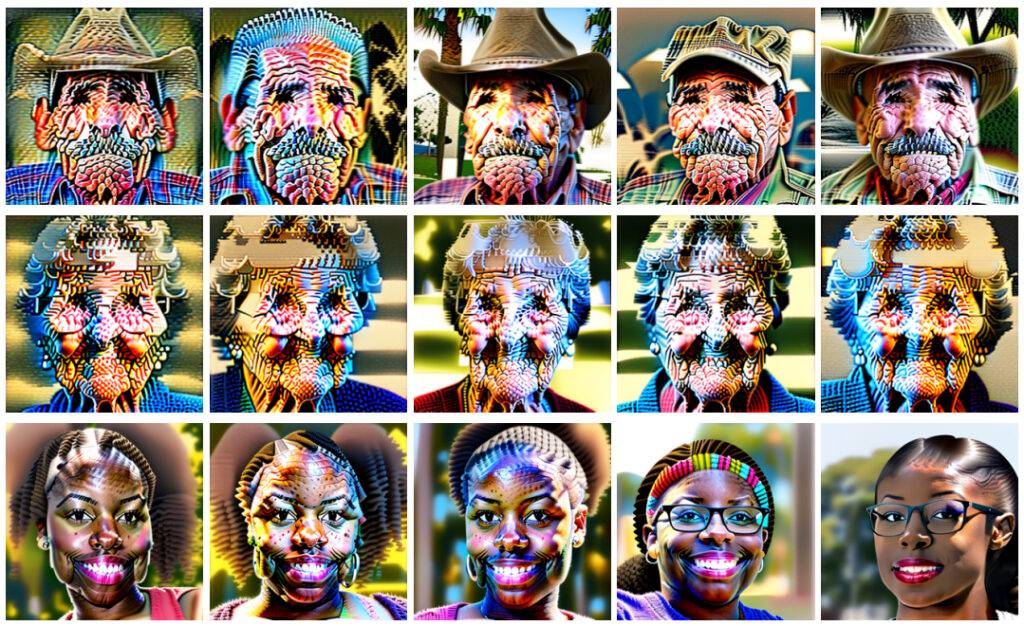
As Google’s AI Overviews and competitor answer engines reshape how consumers find information, the way brands build trust, visibility, and authority is being overturned. In 2025, “AI model collapse”—where unchecked reliance on synthetic AI data and bad data content leads to compounding errors, less reliable answers, and declining model accuracy—presents a clear warning: humans and machines must collaborate more closely than ever to ensure search quality and brand credibility[1][2][3][4].
Essentially, AI models can become “dumber” over time if they are not regularly exposed to high-quality, diverse data. Several warning signs are emerging:
- AI systems are returning answers based on summaries of summaries, increasing the risk of factual inaccuracy and hallucinations[3][4].
- For hard data—like market shares or financial statistics—AIs now more often reference low-quality or derivative sources instead of primary data. Unless users explicitly constrain their queries (e.g., “SEC 10-K”), results are prone to error[3].
- With so much web content now generated or influenced by AI, new model updates risk becoming “copies of copies,” further degrading overall quality[1][2][5].
- The collapse of web publisher traffic to AI engine summaries doesn’t just hurt business models: it diminishes the availability of reliable, well-researched content for future training or summarization[2][6]. This exacerbates the model collapse loop, since genuine, high-quality human-created data is increasingly rare compared to the avalanche of “AI slop” being created[1][2][5].
The principle of “garbage in, garbage out” (GIGO) remains critical: flawed or irrelevant data input will produce flawed or useless output—a problem as old as computing but now massively amplified by generative AI[1][2].
Mitigation proposals, such as mixing synthetic data with fresh human content, are challenged by the cost of high-quality human-generated content, which is expensive to produce compared to low-quality, abundant content—thus accelerating the drift toward model collapse[3][1].
AI model collapse is not just a theoretical risk: it’s already emerging as LLMs retrain on their own outputs and the wider web fills with derivative, AI-generated content[1][2][3][4]. The degenerative cycle leads to information that is less accurate, less diverse, and ultimately, less useful. A 2024 Nature study confirms that “the model becomes poisoned with its own projection of reality,” erasing rare facts, mislabeling context, and amplifying feedback loops of error[5]. Proactive human engagement—such as direct annotation, expert review, and ensuring fresh, real-world examples in training data—remains the most effective safeguard against these compounding errors[3][2][1].
Why Human Oversight Matters More Than Ever
Human-in-the-Loop (HITL) annotation and continuous monitoring now define best-in-class AI workflows. Humans review ambiguous AI outputs, supply edge-case knowledge, and ensure real-time data correction—constantly “immunizing” models against the drift and inaccuracies that lead to collapse[3][1][4].
EEAT Content: The Bedrock of Modern AI Visibility
With AI Overviews answering over 13% of Google queries (and rising fast), search traffic to traditional websites has already dropped by up to 34% for first-page links in 2025[7][8]. The game is no longer just about ranking at the top: it’s about shaping the answers the AI itself delivers[8][7].
High-quality, well-researched EEAT content—Experience, Expertise, Authoritativeness, Trustworthiness—has become the most valuable commodity for brands seeking visibility. Google’s new AI-driven answer engines and chatbots now explicitly mine for signals of credibility, domain expertise, and richly sourced content when assembling Overviews[8][9]. Brands that demonstrate EEAT, with genuine author bios, authoritative links, structured data, professional credentials, and up-to-date references, not only rank better—they become the answers[8][9].
SEO, AEO, and GEO: Crafting Content for Humans and Generative Engines
Traditional SEO is no longer enough. While keyword research and fast-loading pages still matter, AI Overviews often summarize from multiple sources and reference only the top links, pushing others down the page[7][8][6].
Answer Engine Optimization (AEO) and Generative Engine Optimization (GEO) now sit alongside SEO as essential strategies. Content must be conversational, well-structured, easy for AI models to understand, and compliant with EEAT guidelines[7][8]. Table-based answers, Q&A schemas, bullet points, and direct language make it easier for AI to pull and cite your expertise[8].
User mentions and authentic reviews across trusted forums and review engines now significantly boost citations in AI results—being widely discussed in high-quality, credible venues raises a brand’s chances of AI selection[7][8].
Actionable Strategies for Brands
- Embed Human Expertise Early and Often
Prioritize human-in-the-loop workflows at every stage—data collection, model training, validation, and regular audits for accuracy and up-to-date facts. This reduces risk of model drift and increases trust[1][3][4]. - Double Down on EEAT Across All Content
Implement expert bios, cite sources, verify data, and structure content for easy scanning by humans and AI. Maintain brand authority across all platforms[8][9]. - Blend SEO, AEO, and GEO Practices
Combine core SEO with AEO’s focus on direct, conversational answers and GEO’s use of transparent, well-marked data and structured formats. Use schema, FAQs, bullet points, and question-based headings to ensure your content is AI-ready[8][7]. - Monitor and Adapt: AI Search is Dynamic
Regularly review which content is surfacing in AI engines and update information and formats as needed to maintain visibility[8][7].
The Road Ahead: Humans as Guardians of Digital Truth
AI-generated search is a double-edged sword—unlocking new engagement, but only if humans provide the continuous input, governance, and expertise AI still cannot replicate[1][2][8][3][4]. Brands that invest in human expertise, embrace robust EEAT content, and blend traditional SEO with AEO/GEO best practices will not only stay at the top—they’ll help ensure AI provides accurate, trustworthy, and useful information to billions[1][8][3][4].
References:
- Oxford study on model collapse (Nature, July 2024)[1]
- Consumer search habit trends for 2025[7]
- Model collapse and internet data contamination in 2025[2]
- The new rules of AI-driven search – Google’s AI Mode, Overviews, and Answer Engines[8]
- The Register on model collapse and consequences for accuracy/diversity[3]
- Future of information discovery & changed publisher traffic[6]
- Nature article on model collapse mechanisms[5]
- Industry analysis of AI-generated answer dominance and GEO[4]
- Current understanding of the risks of recursive training[4]
- Google on EEAT, authority signals, and answer engine best practices in 2025[9]
⁂
- https://www.cs.ox.ac.uk/news/2356-full.html
- https://jolt.law.harvard.edu/digest/model-collapse-and-the-right-to-uncontaminated-human-generated-data
- https://www.theregister.com/2025/05/27/opinion_column_ai_model_collapse/
- https://onlydeadfish.co.uk/2025/04/29/on-ai-model-collapse-and-the-era-of-experience/
- https://www.nature.com/articles/s41586-024-07566-y
- https://yourstory.com/2025/04/ai-search-engines-future-of-information-discovery-google-seo-analytics
- https://writesonic.com/blog/consumer-search-habits
- https://www.yext.com/blog/2025/06/the-new-rules-for-search-google-ai-mode-rise-answer-engine
- https://www.thinkwithgoogle.com/intl/en-emea/marketing-strategies/search/ai-search-consumer-behaviour/